
Multi-Vertical Enterprise & Operations Automation Solutions
INTRODUCTION
Multi-Process CRM is an enterprise architecture solution designed to bring offline, fragmented processes onto a single centralized platform. Partnering with Wisethink Information Solutions—an ISO 9001:2015 certified ICT consulting firm—the organization is shifting away from manual registers, paper forms, and disparate spreadsheets by leveraging Zoho CRM. The brand aims to build a centralized, secure infrastructure to monitor multi-vertical operations, track process lifecycles, and streamline cross-team workflows efficiently.
PROBLEM STATEMENT
Before exploring automated cloud solutions, the organization faced critical daily challenges:
- Manual Data Dependency: Relying heavily on paper registers, printed forms, and disconnected mailboxes, risking operational errors and version-control conflicts.
- Fragmented Visibility: Only one primary business process was on the system (Training Partners), while the rest ran offline, providing a incomplete picture of true operational status.
- Security & Authorized Tracking: Risks surrounding sensitive process data, where handovers left no paper trail and visibility could only be checked by asking file holders directly.
- Calculation & Reporting Complexities: High effort required to collect, format, and consolidate scattered data across multiple teams before leadership could build a single report.
OBJECTIVES
The implementation of the custom Zoho CRM multi-module system is guided by these key business objectives:
- Transitioning operations into a unified Mobile App + Web App ecosystem across all verticals and processes.
- Eliminating manual spreadsheet calculations and paper-based handovers via automated, governed cloud modules.
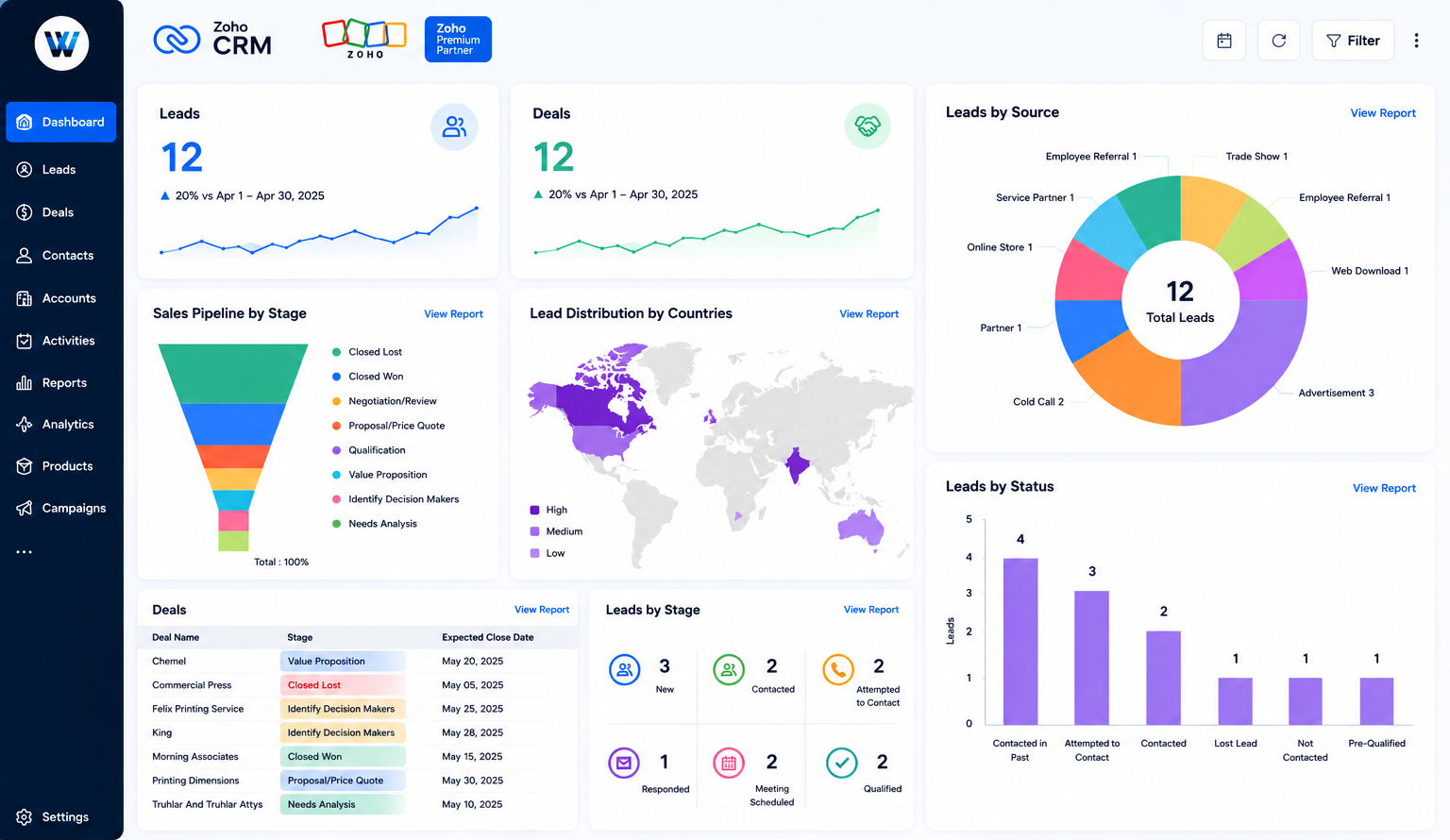
- Empowering management to make business decisions instantly using live, cross-vertical dashboard reporting.
- Ensuring absolute security where only authorized teams see their relevant processes using role-based permissions.
FEATURES OF THE IMPLEMENTED SYSTEM
Product & Services Portfolio (Core Architecture)
A customized array of tracking modules designed on Zoho CRM, including:
- Business Dashboard: Centralized single reporting dashboard summarizing operations across all configured processes.
- TP Business Process Module: Dedicated pipeline and custom stage tracker for Training Partners.
- University Partnerships Module: Custom workspace and stages tailored specifically for university onboarding.
- Student Verification Module: Specialized records and workflows managing validation steps.
- Learning Platform Onboarding Module: Operational tracking module for platform setups.
Tailored Solutions by Application Phase
Tailored application architecture categorized by deployment phase:
- Phase 1 – Documentation: Mapping offline processes, defining custom fields/stages, and project planning.
- Phase 2 – Development: Building custom CRM modules, configuring role-based permission layers, and setting up parallel vertical pipelines.
- Phase 3 & 4 (UAT & Go-Live): Complete QA testing, data uploads from legacy files, user role assignment, and platform go-live.
Deployment Standards
- Feasibility Engineering: Adherence to standard Zoho capabilities, leveraging custom modules and role-based access to keep parallel processes completely independent without user conflicts.
Quality Assurance
- Data Upload Setup: Structured data parsing to securely migrate existing offline records and spreadsheets into designated cloud modules.
PRIVACY & DATA PROTECTION
- Role-Based Access Control: Multi-tier security profiles ensure teams strictly work on their own processes without stepping on other teams' data.
- Admin Controls: Granular visibility controls where cross-process access is granted deliberately rather than by default.
- Encryption: Secure cloud protection for all hosted operational files, records, and partner data.
- Data Security: Absolute separation of vertical records preventing accidental overrides, overlapping edits, or unauthorized data views.
- Automated Backups: Regular system backups ensuring reliable recovery, business continuity, and audit-ready trails.
BENEFITS
For Customers & Partners
- Transparent tracking of verification, partnerships, and onboarding stages with clear progress status.
- Higher data privacy over sensitive verification files and partner records.
- Systematic registration of varying processes across different business verticals.
For the Business
- Instant data access for strategic decisions using a single, live centralized dashboard across all processes.
- Clear clarity on exact operational statuses without chasing individual file holders or manually compiling files.
- Reduced risk of operational errors and overlapping edits via role-based process isolation.
For the Operations Environment
- Elimination of paper handovers and spreadsheet conflicts by bringing all non-business and offline work onto the system.
- Consolidated platform accessible via cloud-based mobile and web application formats.
- Comprehensive user training enabling independent work across all team roles.
CHALLENGES
- Data Aggregation Realities: Timeline estimates depend on collecting legacy offline paper records and team-specific formats during initial onboarding.
- Multi-Vertical Guardrails: Modeling complex, non-standard business flows into native Zoho CRM module boundaries requires expert structural logic.
- Process Governance: Adding new vertical workflows or updating operational stages post-blueprint phase requires a structured Change Request (CR) process.
FUTURE SCOPE
- Subscription Scalability: Moving effortlessly into advanced tiers of Zoho CRM plans as process numbers and record volumes scale.
- Extended Customization: Easily onboarding new business processes as additional modules under the same governed platform umbrella.
- Third-Party Platform Integrations: Potential linking of system CRM modules with external verification tools, LMS engines, and enterprise software via custom APIs.
CONCLUSION
By deploying Zoho CRM's custom multi-module architecture, the organization successfully transitioned from paper registers and scattered spreadsheets into an integrated, secure cloud infrastructure. Replacing paper handovers with governed module records and a single centralized dashboard empowers leadership with complete operational control, clarity, and data privacy. This digital transformation eliminates user conflicts and establishes an enterprise architecture fully equipped for continuous growth.